APPLIANCES
Cooker Brands
An independent guide to the world's most respected range cooker manufacturers — from British heritage names to French artisan makers and Italian culinary institutions.
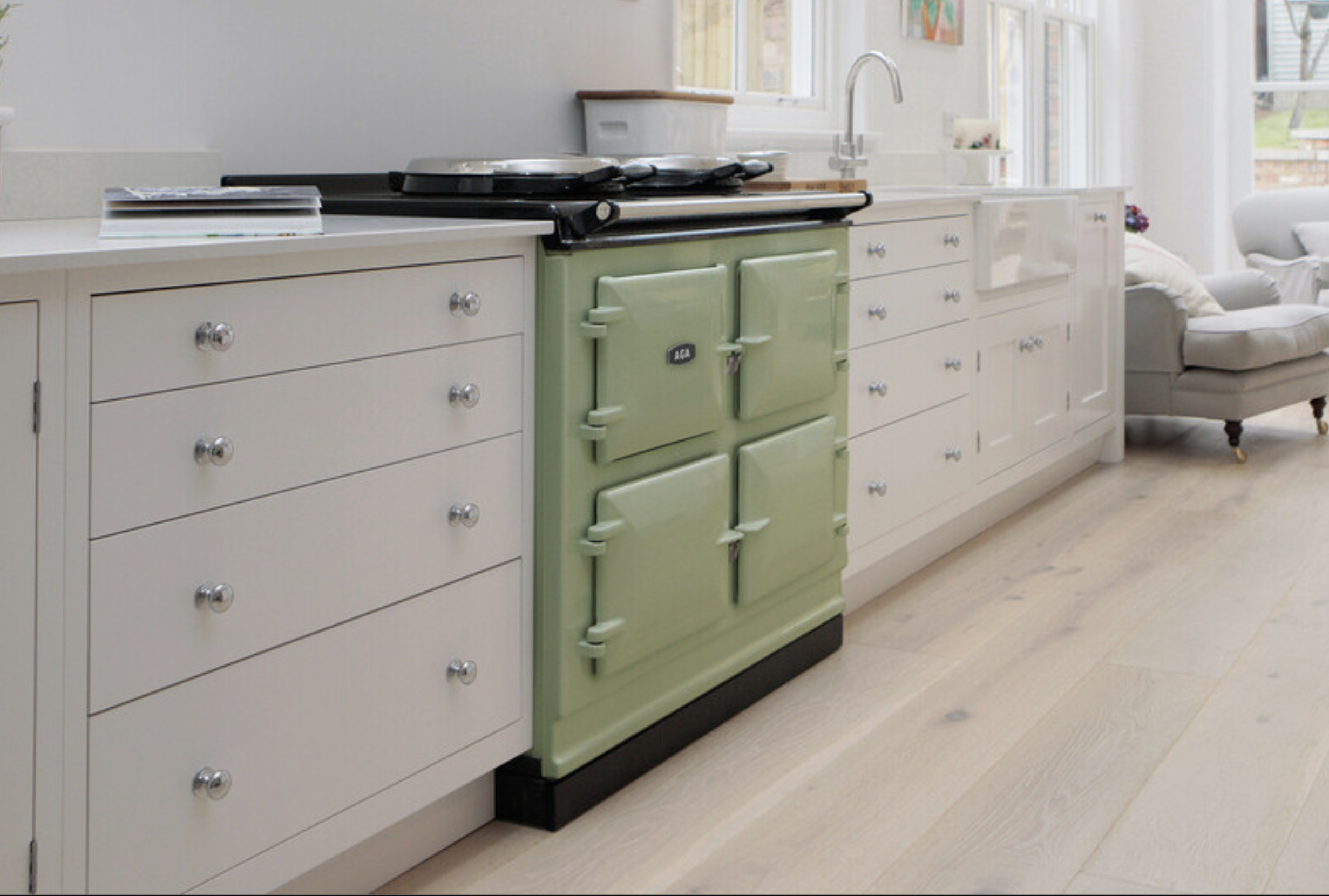
AGA
Est. 1922 · British (Swedish origin)
£7,650–£26,140
The most culturally embedded cooker brand in Britain. Invented by Swedish Nobel laureate Gustaf Dalén in 1922 and manufactured in the UK from 1929, the AGA's cast-iron heat-storage design has become shorthand for a certain kind of country-house life. Still made in Telford, Shropshire, despite American ownership (Middleby Corporation) since 2015. The AGA saga — the literary genre it inspired — speaks to its extraordinary place in British domestic culture. Available in electric, gas, and oil variants ranging from the compact 60cm model to the five-oven ERA series.
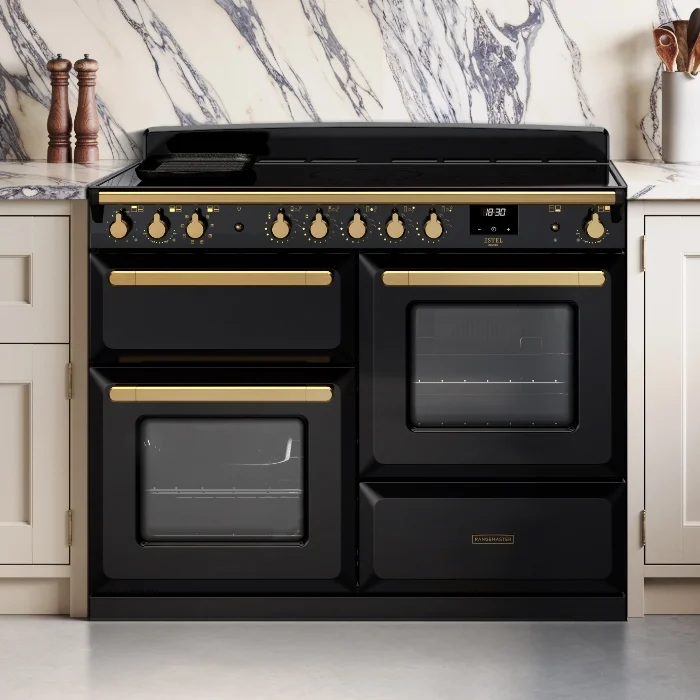
Rangemaster
Est. 1830 · British
£1,800–£4,200
The world's oldest range cooker manufacturer, with an unbroken manufacturing presence in Royal Leamington Spa since 1830. Now Europe's number one range cooker brand by volume. Part of the AGA Rangemaster group. Where AGA occupies the heat-storage niche, Rangemaster dominates the wider domestic range cooker market — over 700 product variations, present in more UK homes than any other brand. Models span the Classic, Classic Deluxe, Edge Deluxe, Elise, and Nexus Steam ranges in 90cm, 100cm, and 110cm widths.
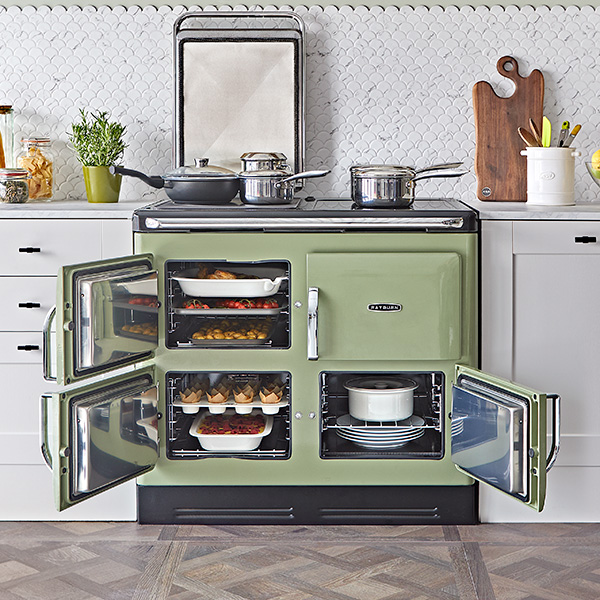
Rayburn
Est. 1946 · British
£5,000–£11,000
Created in the late 1940s as a combined heating and cooking system in a single cast-iron appliance, the Rayburn has occupied a loyal corner of the British country-house kitchen ever since. Part of the AGA Rangemaster stable, it offers a full range from cooking-only models to whole-house boiler systems. Its appeal lies in the same domestic warmth and permanence as the AGA, with added practical utility. The 200 Series suits smaller homes; the 600 Series handles whole-house heating. Oil and gas variants are widely specified in rural properties.
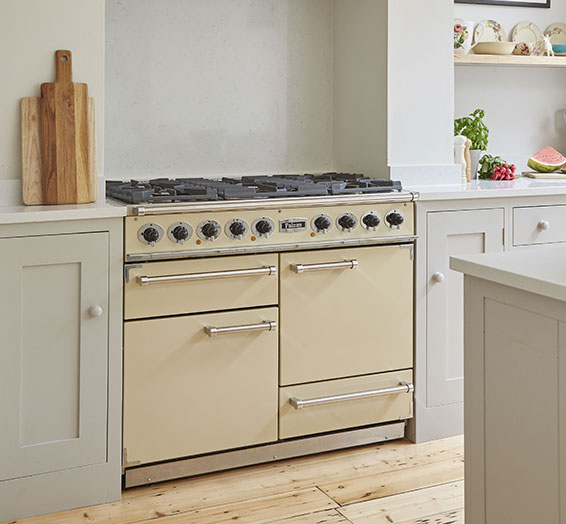
Falcon
Est. 1830 · British
£1,500–£3,500
Sharing Rangemaster's Leamington Spa heritage and manufacturing site, Falcon pitches itself at the professional-domestic crossover. Positioned as the working cook's range — robust, well-specified, less decorative than Lacanche or La Cornue but with genuine engineering credentials. Popular in kitchen studios targeting serious home cooks who want performance over statement. The Nexus and Professional+ Deluxe ranges are well regarded for their dual fuel configuration and substantial oven capacities.
ESSE
Est. 1854 · British
£5,000–£13,000
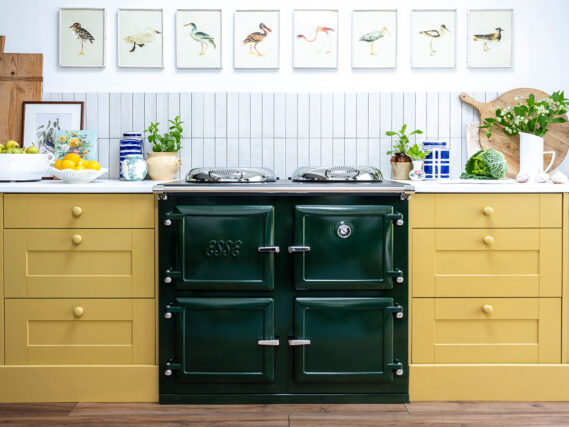
A quietly distinguished British brand with roots in the Victorian era, ESSE has long specialised in solid fuel, oil, and wood-burning range cookers. Its wood-fired models — rare in the mass market — have found a renewed following among sustainability-conscious buyers and those building off-grid or rural homes. Manufactured in Barnoldswick, Lancashire. ESSE occupies a distinctive niche: heritage credentials, a genuine craft story, and an environmental positioning that none of its mainstream competitors can match. The 990 EL and Ironheart models are its most specified in premium rural projects.
Everhot
Est. 1997 · British
£7,095–£18,000+
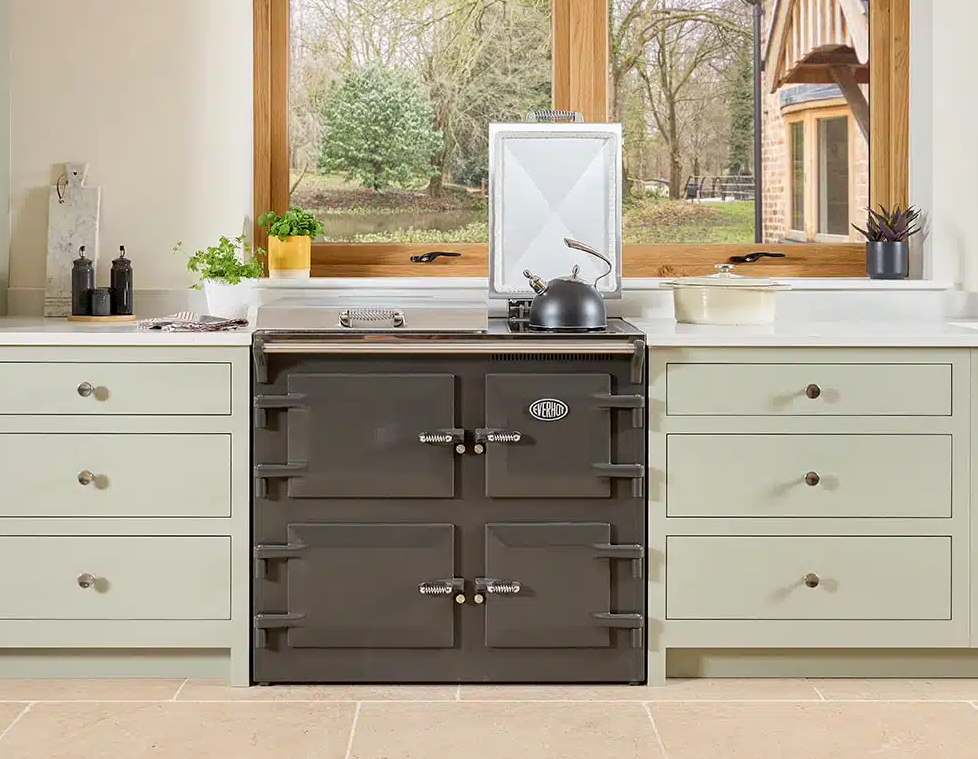
The modern inheritor of the heat-storage tradition, Everhot was created to deliver the warmth and permanence of an AGA with the controllability of a modern appliance. Made in Cirencester, Gloucestershire. WiFi-connected and fully electric, it has built a loyal following among buyers renovating period homes who want the visual warmth of a range cooker without the energy commitment of a traditional always-on model. Available in seven sizes from 60cm to 160cm in 21 colours, each handmade in the brand's carbon-negative Cotswolds factory. Lead time typically 8–10 weeks.
Belling
Est. 1912 · British
£700–£2,000
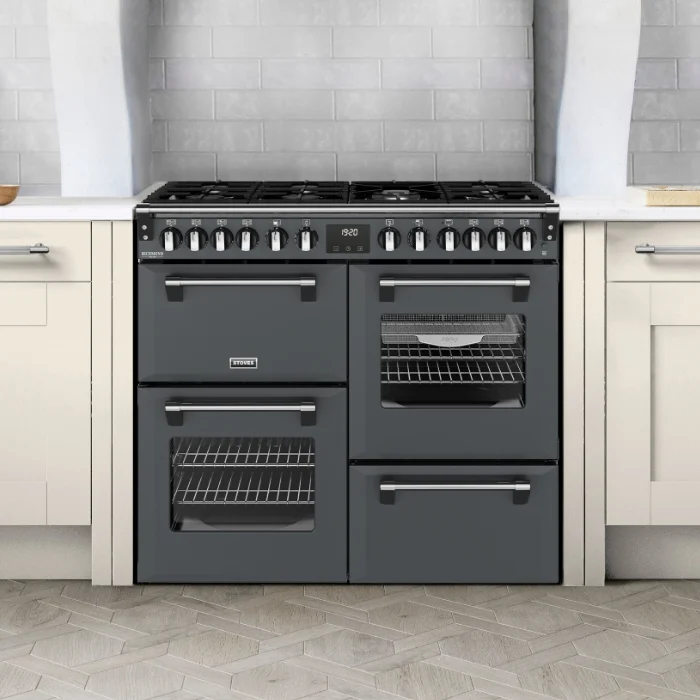
Founded in Enfield in 1912 by Charles Belling, who invented the first mass-market electric fire and went on to pioneer the domestic electric cooker. Belling's heritage as a democratiser of electric cooking gives it genuine historical significance — this is one of the brands that changed how Britain cooks. Now part of the Glen Dimplex group. Mid-market positioning today, but a brand with real depth of story for editorial purposes. The Farmhouse and Country Chef ranges are popular with buyers seeking a traditional aesthetic at an accessible price.
Mercury
Est. 1998 · British
£2,500–£4,500
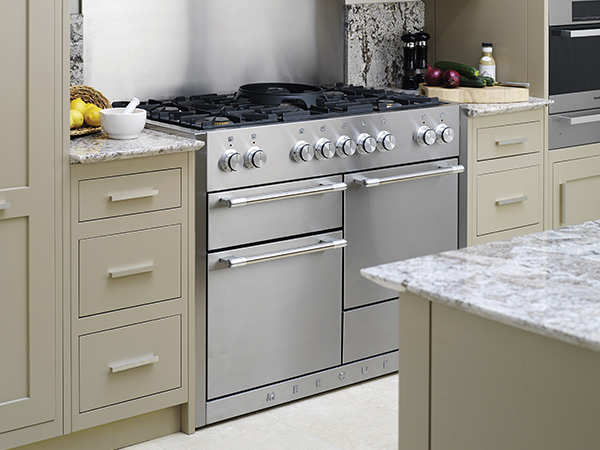
A design-forward British range cooker brand manufactured at Rangemaster's Leamington Spa factory. Acquired by AGA Rangemaster in 2009, Mercury targets the premium end of the domestic range market with a more contemporary aesthetic than its siblings. Strong presence in premium kitchen studio showrooms, particularly in the south of England. The Mira and Aria ranges feature distinctive styling with brass and chrome trim options that sit comfortably alongside handmade kitchen cabinetry.
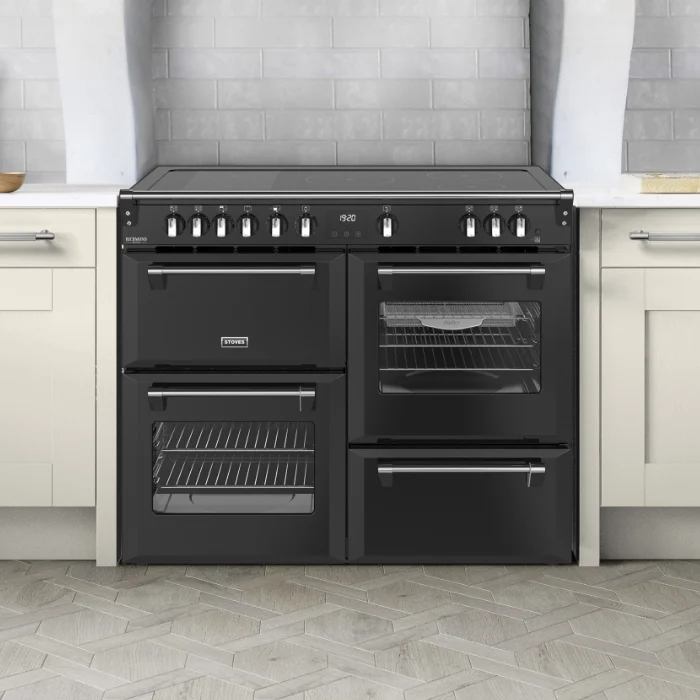
Stoves
Est. 1920 · British
£800–£2,500
Founded on Valentine's Day 1920 in Warrington and now manufactured at its long-standing Rainhill, Merseyside facility, Stoves is a genuine British manufacturing story. Won the Prince of Wales Medal for Industrial Design. Part of Glen Dimplex alongside Belling and Britannia. The Richmond and Sterling ranges have become recognisable fixtures in the premium kitchen studio market — well-specified, British-made, with a track record of innovation. The Sterling Deluxe induction model is frequently specified alongside painted in-frame cabinetry.
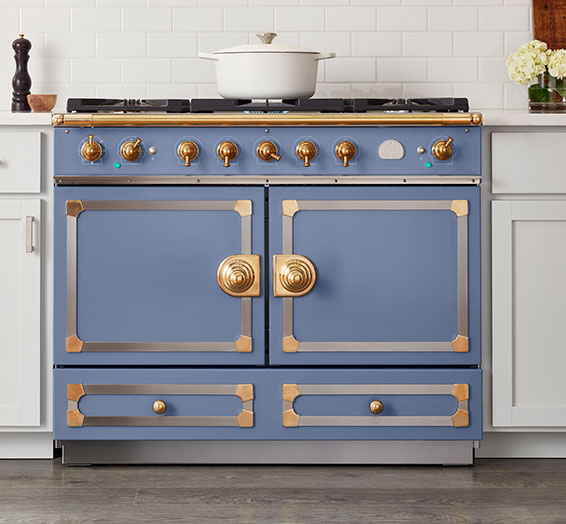
La Cornue
Est. 1908 · French
£7,310–£50,000+
The most aspirational name in the category globally. Founded in Paris in 1908 by Albert Dupuy, who invented the world's first convection oven. The handmade Château series — built to order near Paris with 8,000 possible configurations — represents the haute couture end of the market. The CornuFé series offers entry to the brand from the Albertine 90cm at £7,310 and the CornuFé 110 at around £7,975–£9,000. La Cornue's signature vaulted oven, solid brass burners, and bespoke colour matching make it the definitive kitchen statement piece. Long lead times apply for Château models.
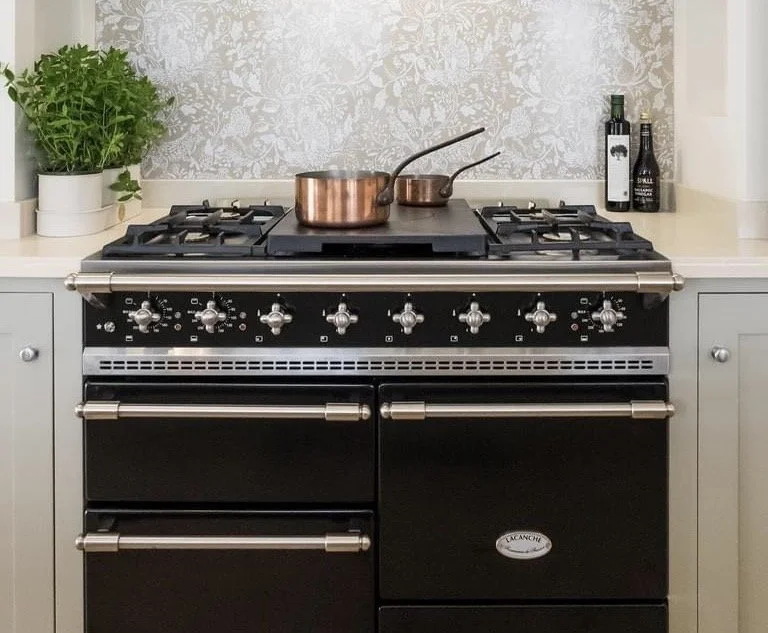
Lacanche
Est. 1820 · French
£5,000–£15,000+
A foundry established in the small Burgundy village of Lacanche over 200 years ago, still hand-building range cookers on the same site today. Awarded a heritage honour by the French government. Where La Cornue is about visual drama, Lacanche is about the serious cook — its appeal lies in semi-professional performance, cast-iron solidity, and the quiet prestige of a product made the same way for generations. Each cooker is built to order in Classic or Modern styling. The Cluny (100cm) is the best-selling model; the Fontenay (180cm) suits the largest kitchens. Trims in brass, chrome, nickel, or stainless steel.
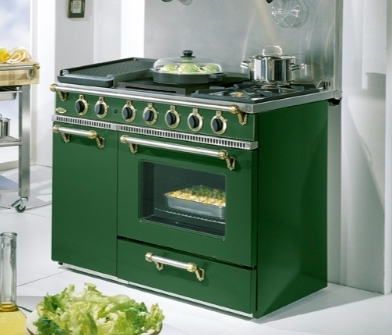
Godin
Est. 1840 · French
£3,000–£8,000
One of France's most historically significant industrial manufacturers, founded by Jean-Baptiste André Godin in Guise, Picardy around 1840. Godin built not only a cast-iron foundry but an entire utopian workers' community — the Familistère — giving the brand an unusual depth of provenance. Best known for its wood-burning and multi-fuel range cookers, Godin occupies a heritage niche in France with limited mainstream UK penetration but resonates strongly with buyers who value authentic industrial craft heritage.
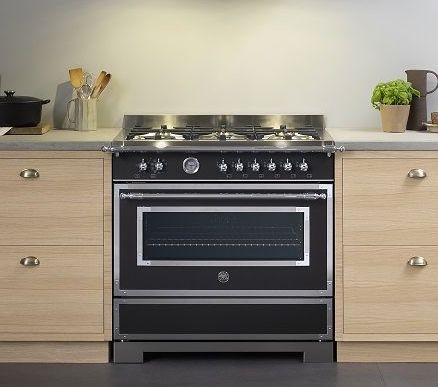
Bertazzoni
Est. 1882 · Italian
£1,800–£5,500
Five generations of family ownership in Guastalla, Emilia-Romagna — the same region as Ferrari and Lamborghini — give Bertazzoni a manufacturing provenance that most competitors cannot match. Founded in 1882, the brand has been making professional-grade cooking appliances for over a century. Available in Professional, Master, Heritage, and Modern Series in sizes from 60cm to 120cm. The Heritage Series suits traditional painted kitchens particularly well; the Professional Series offers bold colour options including red, orange, and yellow. Consistently strong value at the premium end of the mid-market.
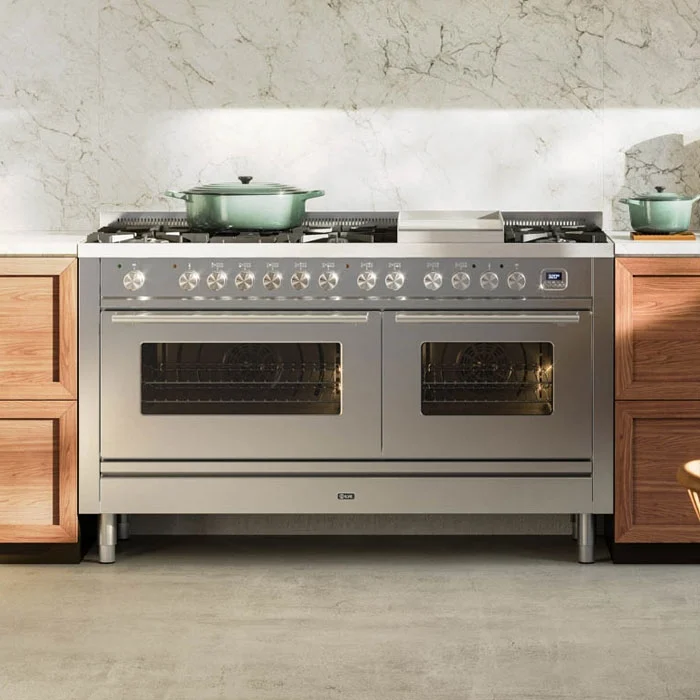
ILVE
Est. 1952 · Italian
£3,700–£12,000+
Founded in 1952 in Campodarsego, near Padua, ILVE has built a strong following in the UK premium kitchen market. Best known for the Majestic and Milano ranges, which combine high customisation — extensive colour options, brass or chrome trim choices, varied hob configurations — with genuine professional cooking performance. The Pro Line range (new for 2025) offers a more contemporary aesthetic. Models span 60cm to 180cm; the Majestic 100cm dual fuel is the most specified model in UK handmade kitchen projects. Strong for buyers wanting colour-matched cabinetry.
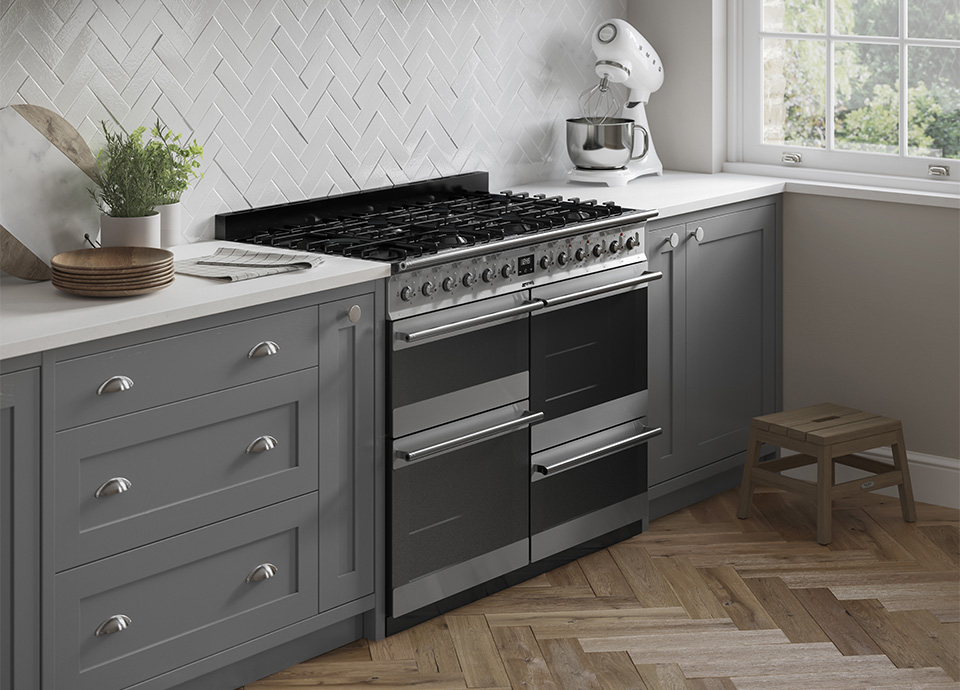
Smeg
Est. 1948 · Italian
£2,000–£6,500
Founded in 1948 in Guastalla — the same town as Bertazzoni — Smeg has become the most recognisable Italian appliance brand globally. Its Victoria and Portofino range cookers carry that design authority into the kitchen. The Victoria is a traditional dual fuel range in a wide colour palette; the Portofino (from 90cm to 120cm) is Smeg's most advanced range, with direct steam technology, pyrolytic cleaning, and mixed induction/gas hob options. Both are widely stocked at John Lewis and premium kitchen retailers. Strong for buyers wanting a design-led focal point.
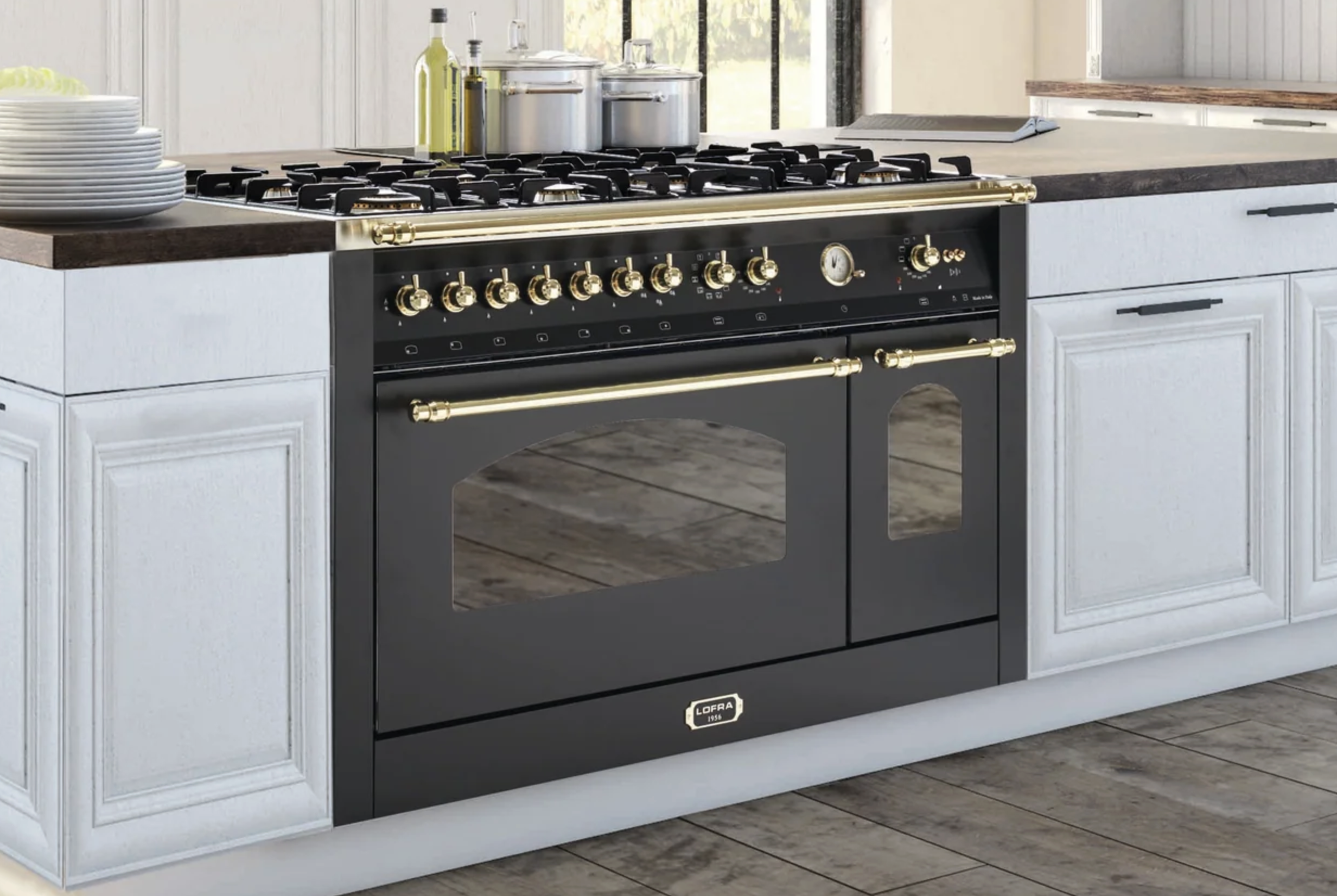
Lofra
Est. 1956 · Italian
£1,500–£3,500
A family business from Pieve di Cento, Emilia-Romagna, founded in 1956. Less prominent in the UK market than ILVE or Bertazzoni, Lofra has built a following among serious cooks and kitchen designers who appreciate its semi-professional specification at a price point below its more visible Italian competitors. The Rainbow and Dolcevita ranges offer strong colour and finish options, with a practical focus on cooking performance that reflects its origins as a supplier to professional kitchens.
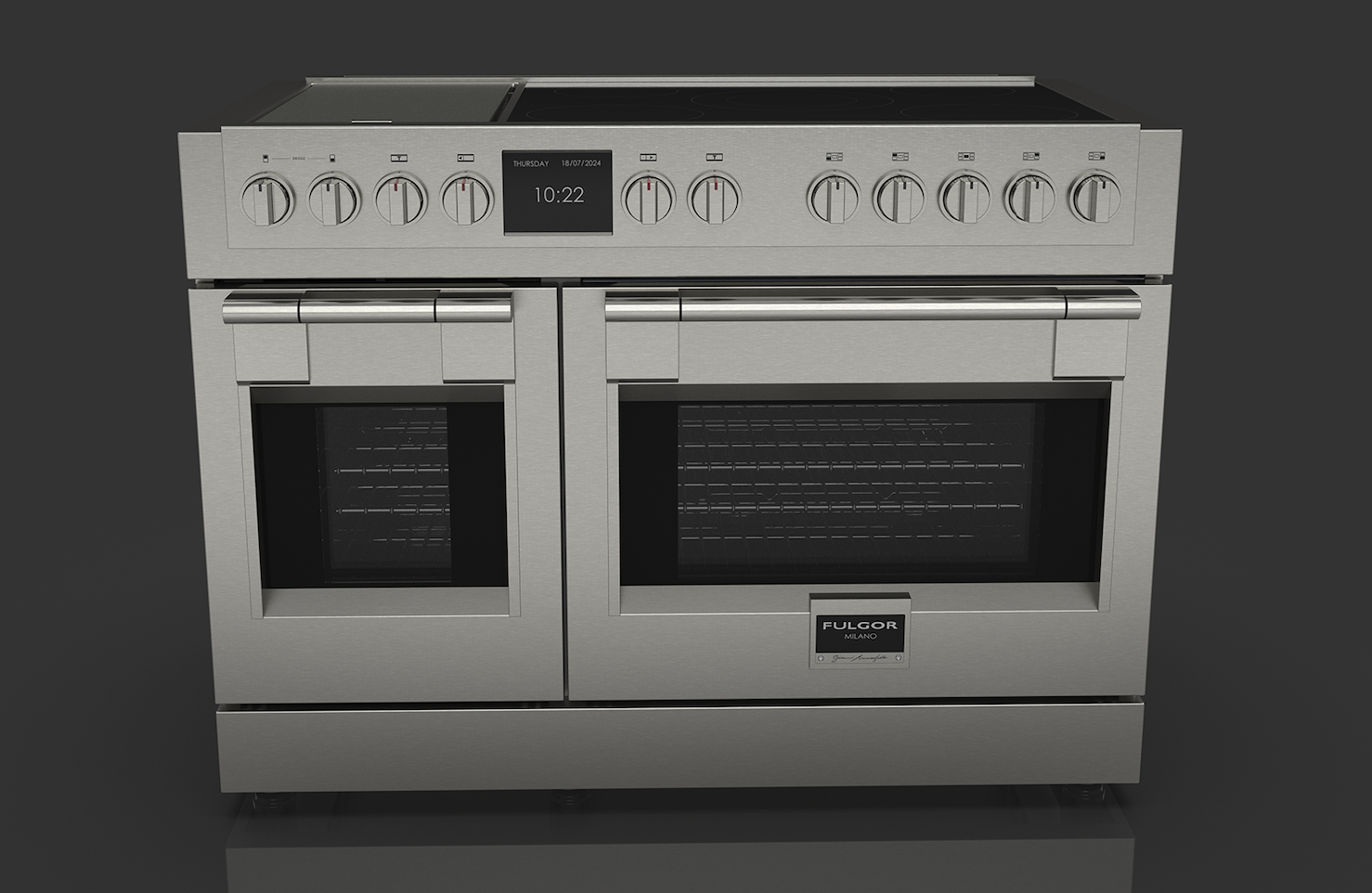
Fulgor Milano
Est. 1949 · Italian
£4,000–£8,500
A Milanese brand with professional cooking heritage going back to 1949, Fulgor Milano has supplied Michelin-starred kitchens in Italy for decades before its repositioning as a premium residential brand. Acquired by the Bertazzoni family group, it occupies the upper tier of the Bertazzoni stable — more design-forward and more expensive than the parent brand, targeting the architect and interior designer market. Its Sofia and Aurora series are increasingly specified in high-end London kitchen projects. Via specialist dealers only.
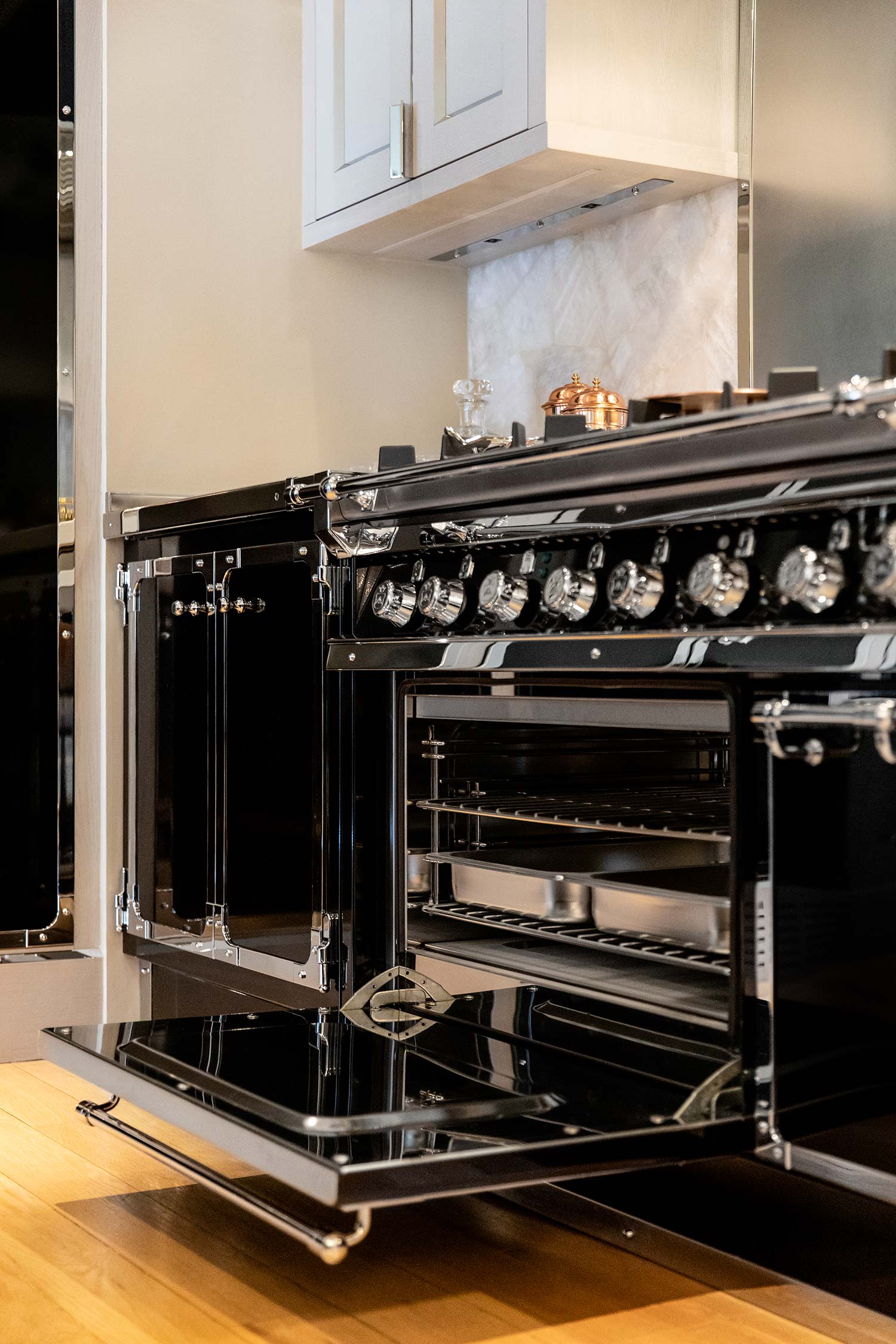
Officine Gullo
Est. 1990 · Italian
POA — bespoke commissions
The ultra-luxury summit of the category. Founded in Florence by Carmelo Gullo, now run by his three sons. Officine Gullo produces bespoke professional cooking ranges in steel, copper, and solid brass that function as kitchen architecture. Bodywork is crafted from steel plating up to 1/8-inch thick; burners operate at up to 10kW; configurations span 42 glossy and 56 matte standard colours plus custom finishes. Each installation is a commission. Has a London showroom in Mayfair. For buyers spending £50,000+ on a kitchen, this is the reference point above La Cornue in both price and exclusivity.
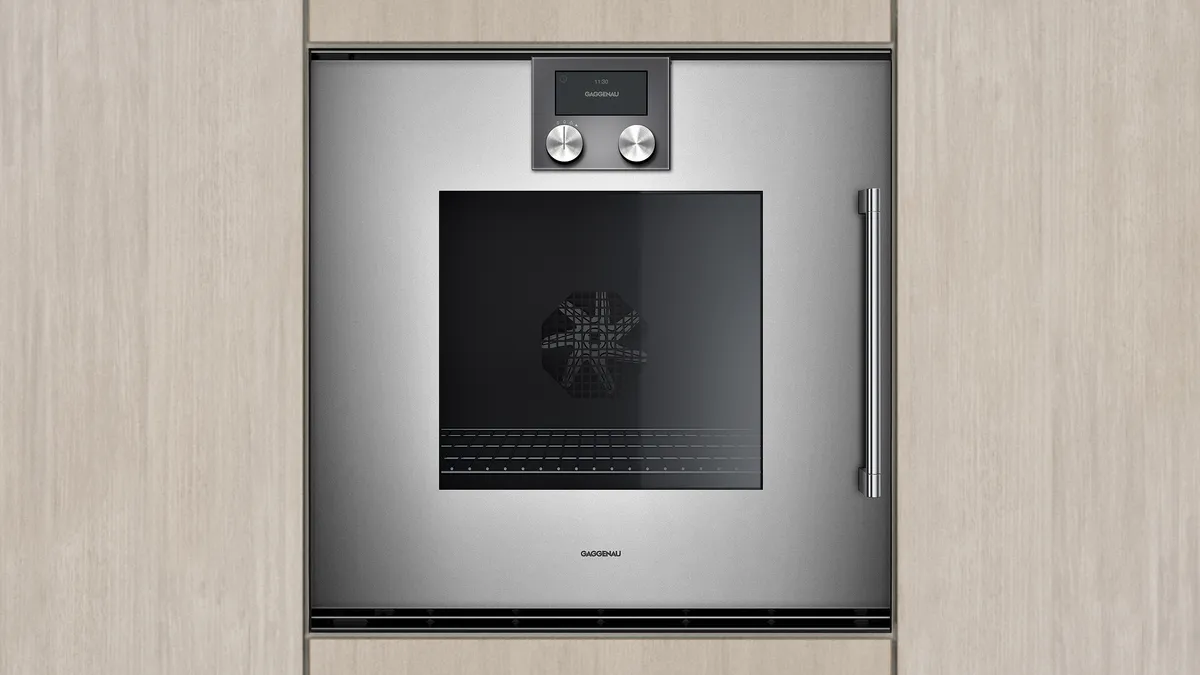
Gaggenau
Est. 1683 · German
£3,500–£10,000+
One of the oldest continuously operating manufacturing businesses in Europe, Gaggenau traces its origins to a metalworks established in the Black Forest in 1683. Today a premium brand within BSH, Gaggenau is the choice of leading architects and kitchen designers worldwide — its built-in appliances appear in projects by Bulthaup, Poggenpohl, and the world's most exacting bespoke kitchen makers. The 200 and 400 Series ovens and Vario cooktops are the benchmark against which all other built-in appliances are measured. Not a range cooker brand — Gaggenau is specified as individual built-in components.
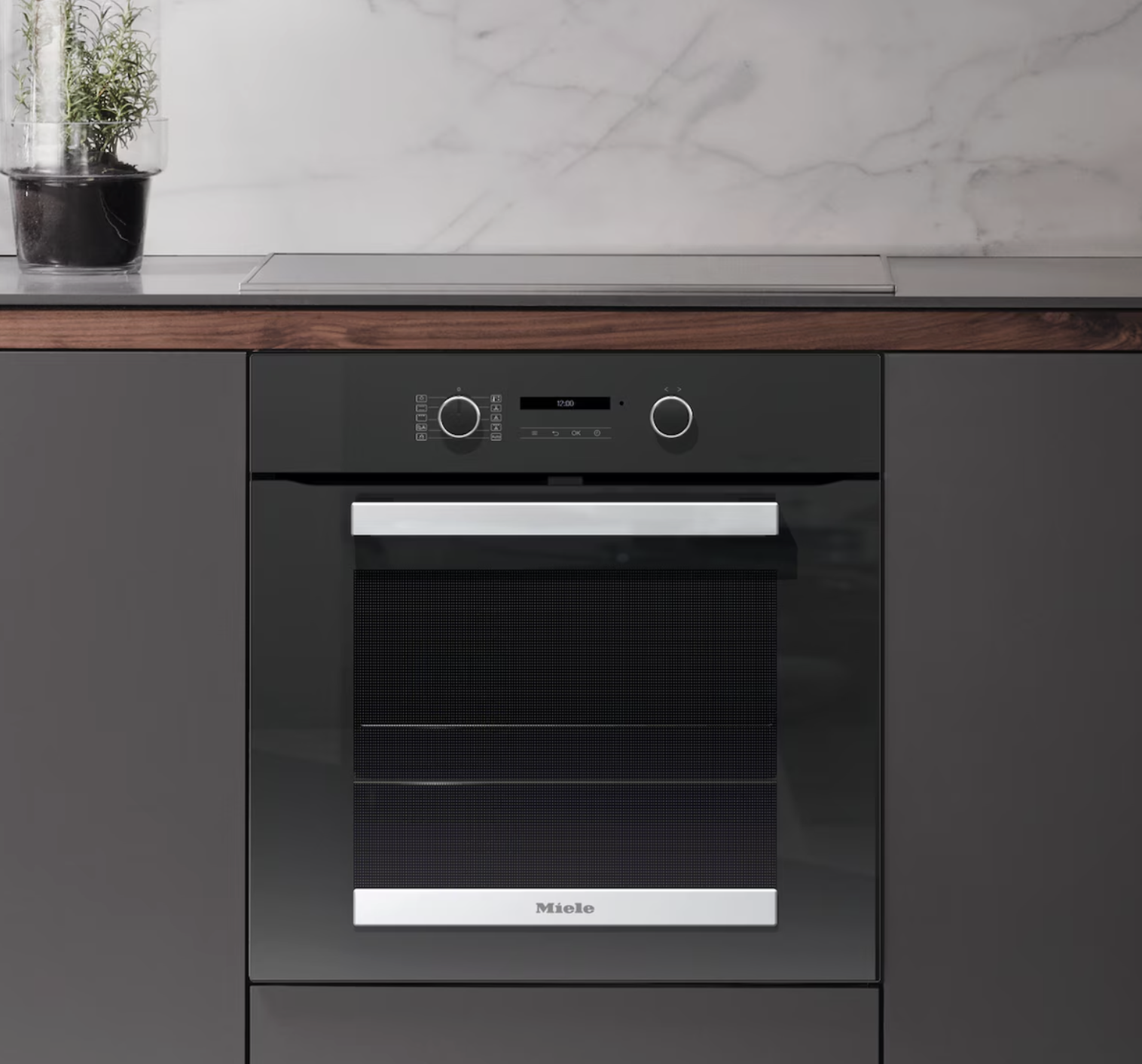
Miele
Est. 1899 · German
£1,200–£5,000+
Family-owned since its founding in Gütersloh in 1899 by Carl Miele and Reinhard Zinkann, and still family-run today. Miele's brand promise — immer besser, forever better — is backed by a testing regime that puts appliances through the equivalent of 20 years of use before release. The default specification choice for built-in ovens and induction hobs in premium British kitchens. The H2 Series represents entry-level Miele; the H7 Series pyrolytic ovens and combi steam ovens are the flagship. Not a range cooker brand — Miele is specified as individual built-in components.
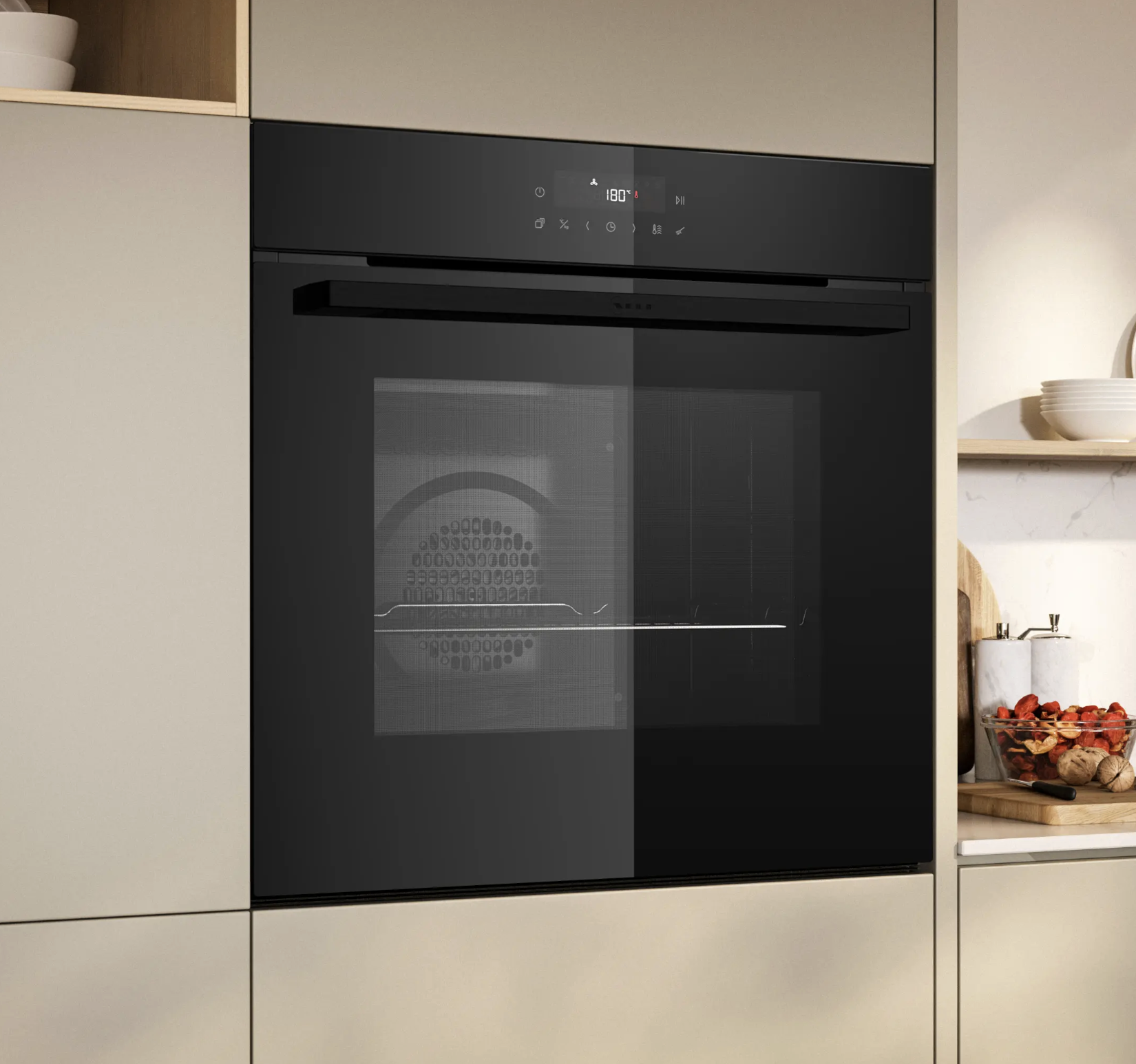
Neff
Est. 1877 · German
£500–£2,500
Founded in 1877 in Bretten, Baden-Württemberg, Neff has been part of the BSH group since 1968. In the UK, Neff has built an unusually strong relationship with the kitchen studio trade — its Slide&Hide door mechanism is a signature feature that kitchen designers specify by name. Less prestigious than Gaggenau but more kitchen-designer-focused than Bosch, Neff sits in a productive middle ground: technically serious, well-supported, and a familiar specification in premium fitted kitchens from £20,000 upward. The N70 and N90 combi steam ovens are most frequently specified.
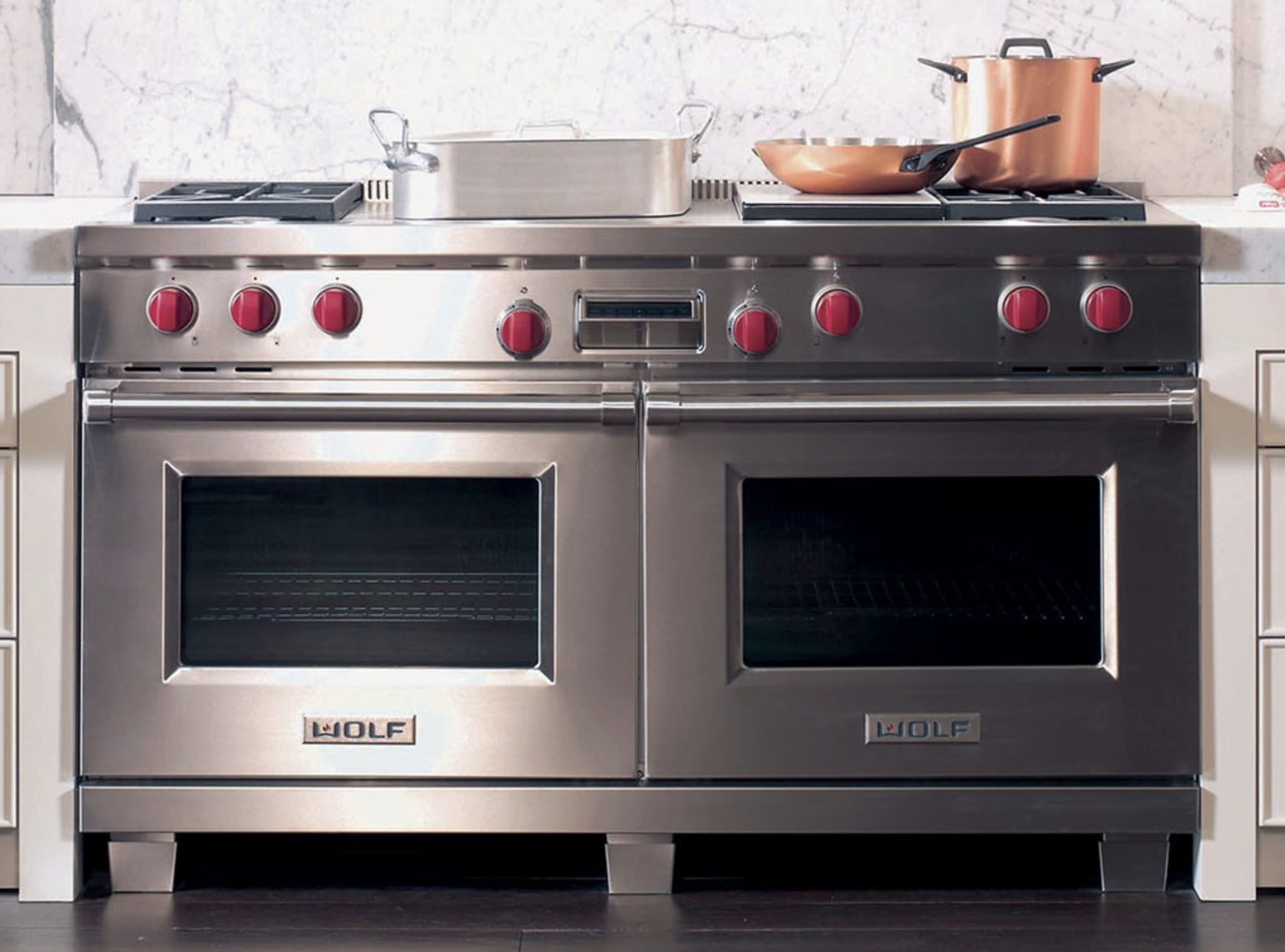
Wolf
Est. 1934 · American
£10,000–£25,000+
Founded in Madison, Wisconsin in 1934, Wolf became the dominant professional-to-domestic crossover brand in the US market before its acquisition by Sub-Zero Group in 2000. The iconic red knobs are one of the most recognised design details in luxury kitchen appliances. Wolf's dual fuel and all-gas ranges are favoured by serious cooks who prioritise output — high-BTU burners, dual VertiCross convection ovens, exceptional performance. Prices start around £10,000 and are available via specialist UK dealers including Walter Dix, Edwards & Godding, and Caterbitz.
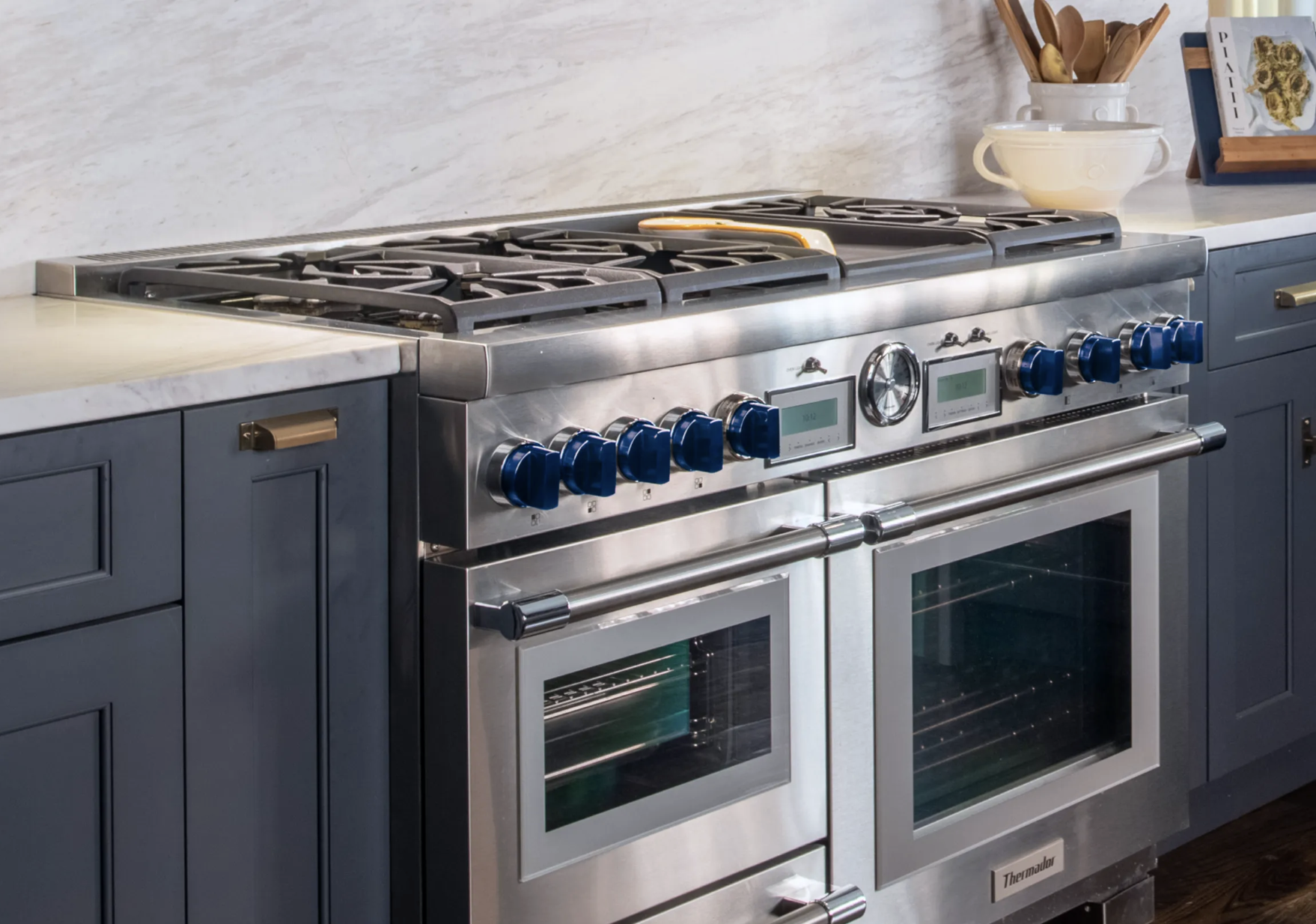
Thermador
Est. 1916 · American
£8,000–£20,000+
Founded in Los Angeles in 1916, Thermador has a longer history than most American competitors and a genuine innovation record — it invented the wall oven in 1947 and introduced the first residential cooktop with a professional-grade 22,000 BTU burner. Part of the BSH group since 1998. Thermador's Star Burner, with its distinctive five-pointed shape offering superior flame coverage, is widely cited as a genuine engineering advancement. Growing UK presence among buyers familiar with the brand through American interiors media. Available via specialist dealers.
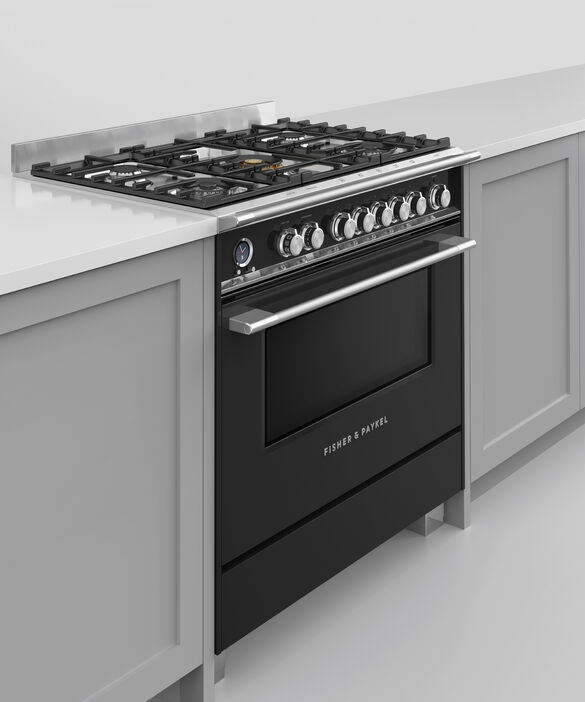
Fisher & Paykel
Est. 1934 · New Zealand
£2,500–£5,500
Founded in Auckland in 1934 by Woolf Fisher and Maurice Paykel, Fisher & Paykel has built a strong reputation for intelligent design — its DishDrawer dishwasher and CoolDrawer refrigerator are cited in industrial design curricula worldwide. Now owned by Haier following a 2012 acquisition. The Series 7 and Series 9 range cookers are increasingly specified in UK premium kitchen studios. The 90cm Series 9 dual fuel with gas hob and pyrolytic electric oven is the most popular UK model. Stocked at John Lewis and independent kitchen retailers.
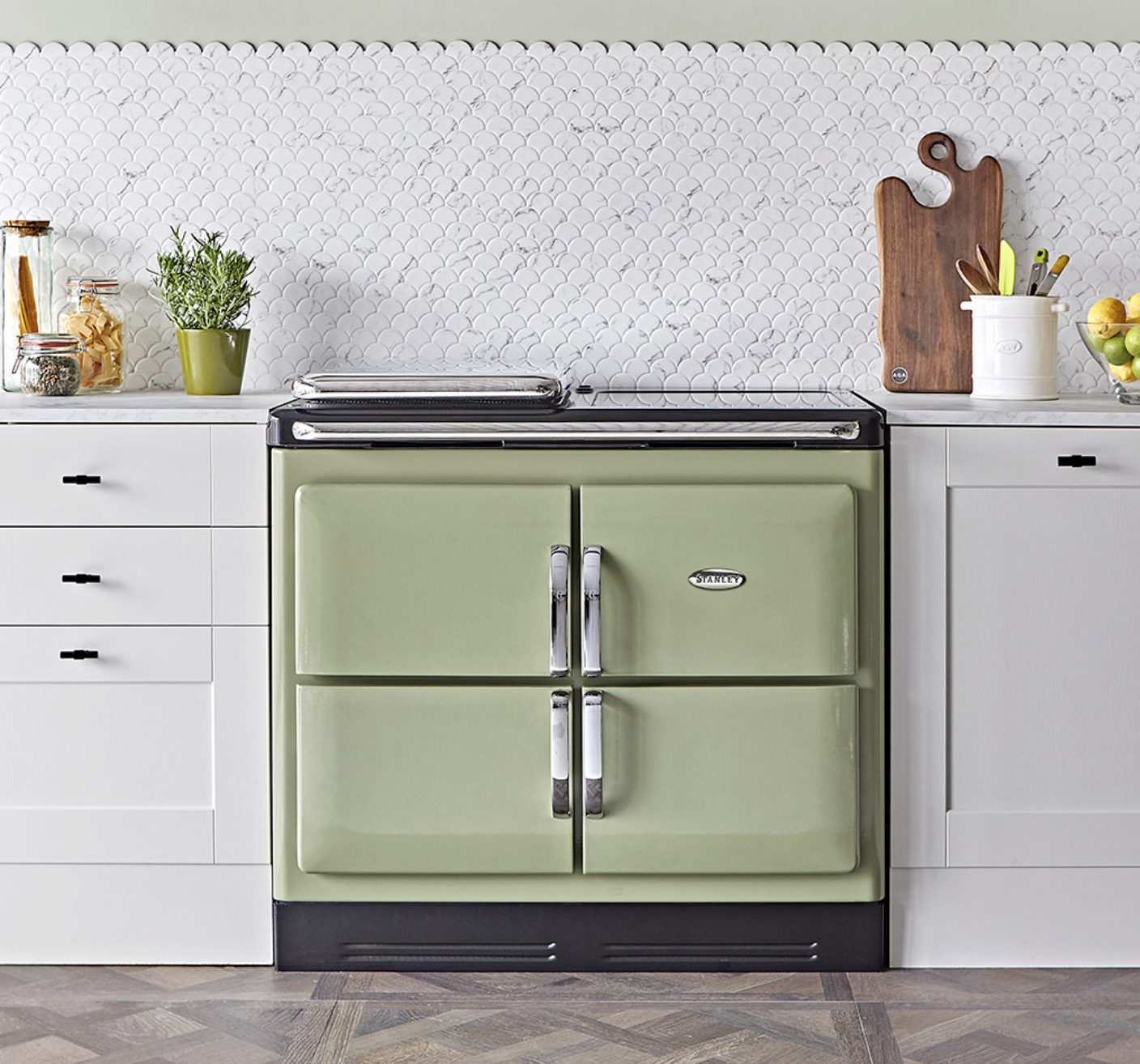
Stanley
Est. 1934 · Irish
£2,500–£7,000
Manufactured in Waterford since 1934 by Waterford Stanley, now part of Glen Dimplex. Stanley range cookers are an authentic expression of Irish domestic craft heritage. Solid fuel, oil, and gas variants, all built with the robust construction appropriate for farmhouse and rural settings. Stanley has a devoted following in Ireland and among UK buyers with rural properties — its reputation for longevity and ease of service in remote locations gives it a practical credibility that more glamorous brands cannot match. The Brandon and Cara models are most widely specified.